Google's music generation model Lyria 2 supposedly sets a new performance benchmark in AI music generation.
But what can it do? Does it truly match up to the hype? Any limitations to its capabilities? These are just some of the many questions I wanted answers to, as I'm sure you would too.
So, let me break it down for you and tell you what my experience with Lyria 2 was like.
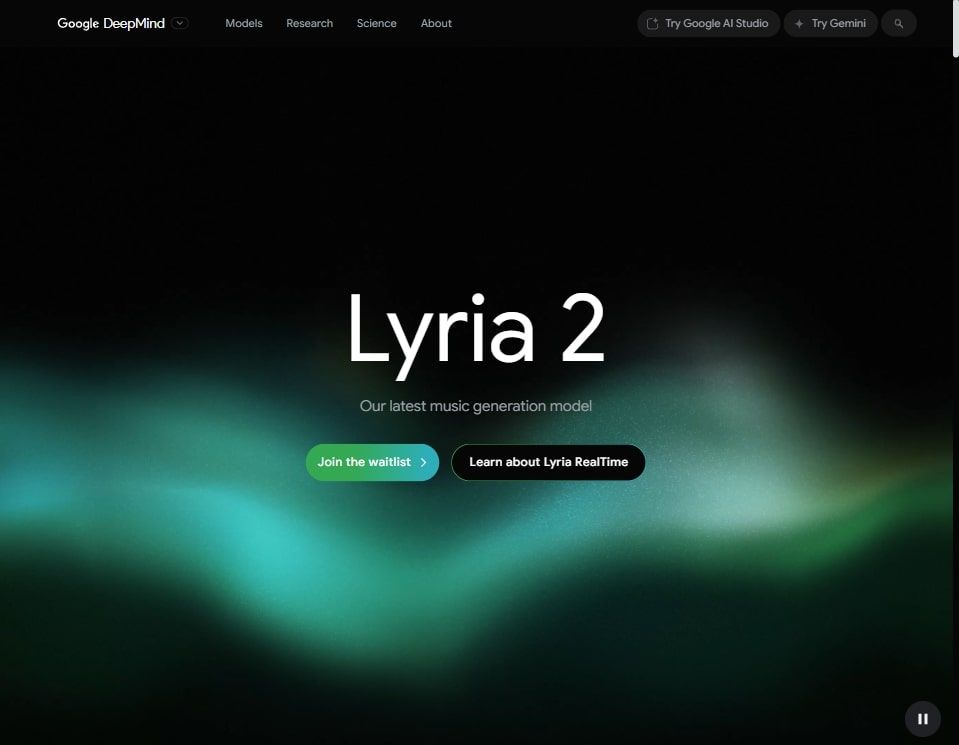
Google Lyria 2 Overview and My First Impression
Lyria 2 is an AI music generation model from Google DeepMind. It is developed to be one of their most advanced and controllable AI music interface.
Specifically built for musicians and producers, Lyria 2 provides even more granular creative control to help artists generate high-fidelity songs across numerous genres.
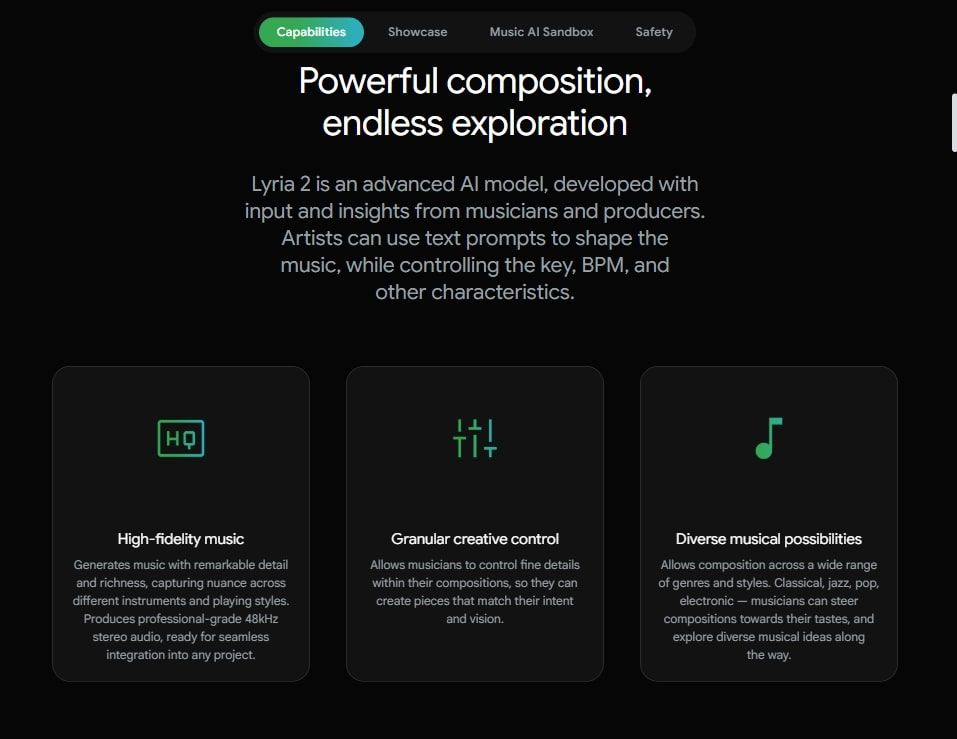
So, if I'm creating electronic, jazz, pop, classical or film scores, I can use text prompts for the starting points and control intricate aspects like key and tempo for refined audio compositions.
Lyria 2 also introduces a new lyrics section for generating vocals that even lets you precisely position the lyrics on a sliding timeline under the audio's waveforms.
This ensures the lyrics can begin and end at the desired timeline spots. The AI model also offers audio extension, which lengthens existing songs in the same style for faster creative thinking.
Lyria 2 also supports transformation arcs, which means you can control the degree of change within track segments for more professional-grade results.
These unique innovations make it possible for anyone like me to create intricate songs that go beyond familiar genres and tinker with all sorts of unique melodies and arrangements.
All this made me excited to try out Google Lyria 2, and the following is about my personal experience with it.
Evaluation of Lyria 2's Outputs
I wanted to know how well it could handle different styles, so I tried three tracks with pretty different genres.
The first track was a surf rock song with a little bit of a spaghetti western vibe. And here is the result:
Lyria 2's creation came with the electric guitar that had that classic, echo-y sound you'd expect from surf rock, and the melody was simple but really catchy. The bass and drums worked together perfectly to create a fun, upbeat rhythm.
Even though it was only around 30 seconds long, it felt like it could be the perfect background music for a sunny road trip or a cool beach scene. It had this retro, laid-back energy that made me want to keep listening.
The next example is an electronic track. This one had a totally different vibe—it was slower and very atmospheric. Check out the output here:
The bass was deep and gave the music a strong foundation, while the background pads and melody created a mysterious, almost emotional feeling. The drums were soft and didn't stand out too much, which made the whole track feel smooth and calm.
Honestly, it sounded like something you'd hear in a movie during a sad or thoughtful moment, or maybe in a video game that takes place at night in a big city. It was really cool how the music made me feel something so quickly.
The final example is an epic orchestral piece. You can listen to it here:
It started slow and serious, with strings that set a dramatic mood. Then it built up with horns and percussion, making it sound huge and powerful.
It felt like the climax of a big movie scene, the kind where the hero shows up or something really exciting happens. If you're a game creator or filmmaker, this is the kind of track for getting unstuck when you need fresh ideas or inspiration.
Create and Control Music Live – Lyria RealTime
Lyria RealTime is a cool new AI studio released along with Google Lyria 2 that lets you create and control music live.
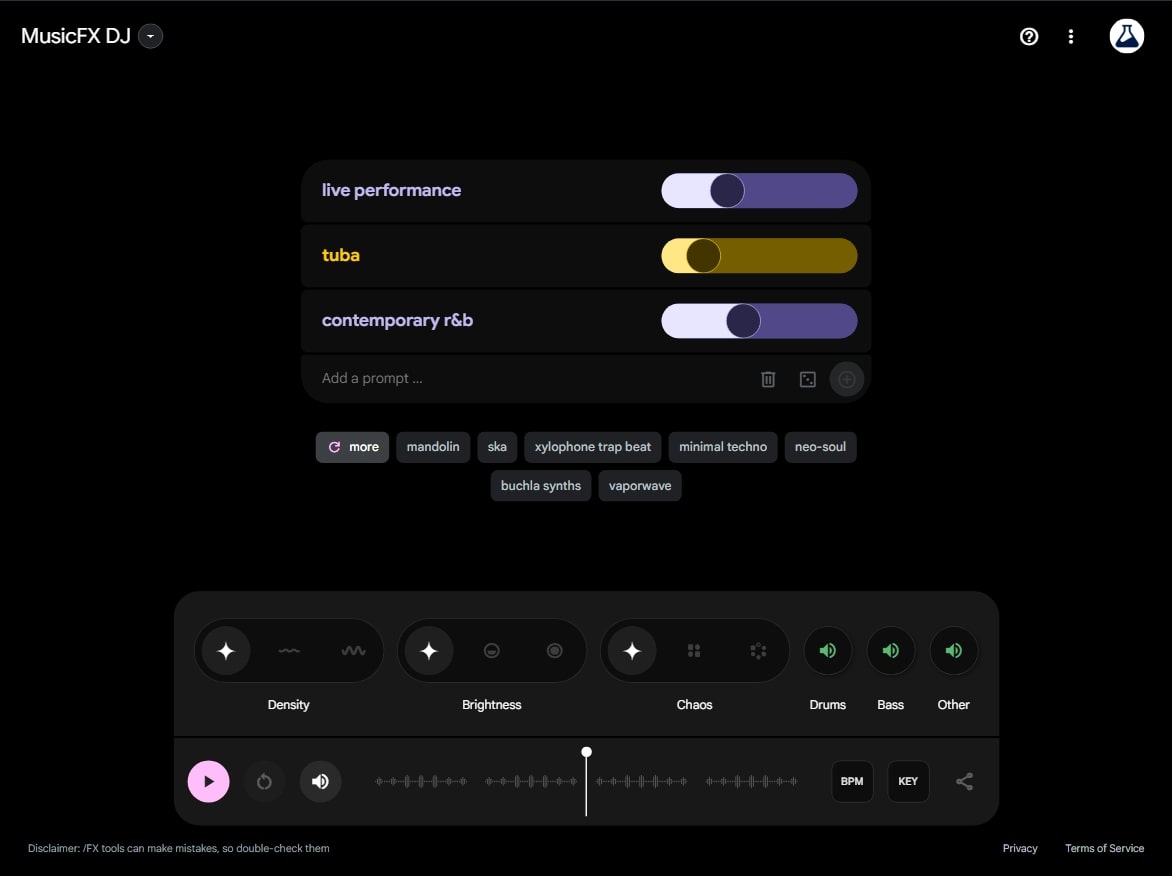
You can tell Lyria what kind of music you want by typing prompts like “ambient house” or “classic funk,” and it will create music samples for you to build on. You can even change instruments, mix genres, or adjust the mood on the fly.
One of the coolest parts for me was how I could tweak the music live. There are sliders and settings for tempo, key, brightness, and even the mood of the song. Changing these felt like adjusting the dials on a DJ mixer, and the music would smoothly shift as I played.
Using Lyria RealTime felt more like jamming with a creative partner than just pressing a button to get a song. It really encouraged me to explore sounds I would not normally try.
What is Bad About Google Lyria 2?
Right off the bat, my first impression upon landing on Lyria 2's music dashboard was the advanced nature of the interface.
The virtual music studio has quite a few bells and whistles, but I am not sure it would cater well to beginners since it comes with a steep learning curve.
This is especially true of the editing interface. It's nice to see that it gives professionals greater control over the tracks, but it can be tricky to navigate, especially as a first-time user.
Aside from that, Lyria 2 is still limited in terms of the number of music genres it supports. It is also yet to support native languages, so its global music audience reach is limited.
For all of these reasons, finding an alternative AI music generator is a must in the meantime.
Best Lyria 2 Alternative for Music Generation – Tad AI
One of the best alternative that I would strongly recommend you check out is Tad AI.
Powered by advanced music models, Tad AI is a powerful AI music generator that allows you to produce professional-grade music using simple text prompts or other references.
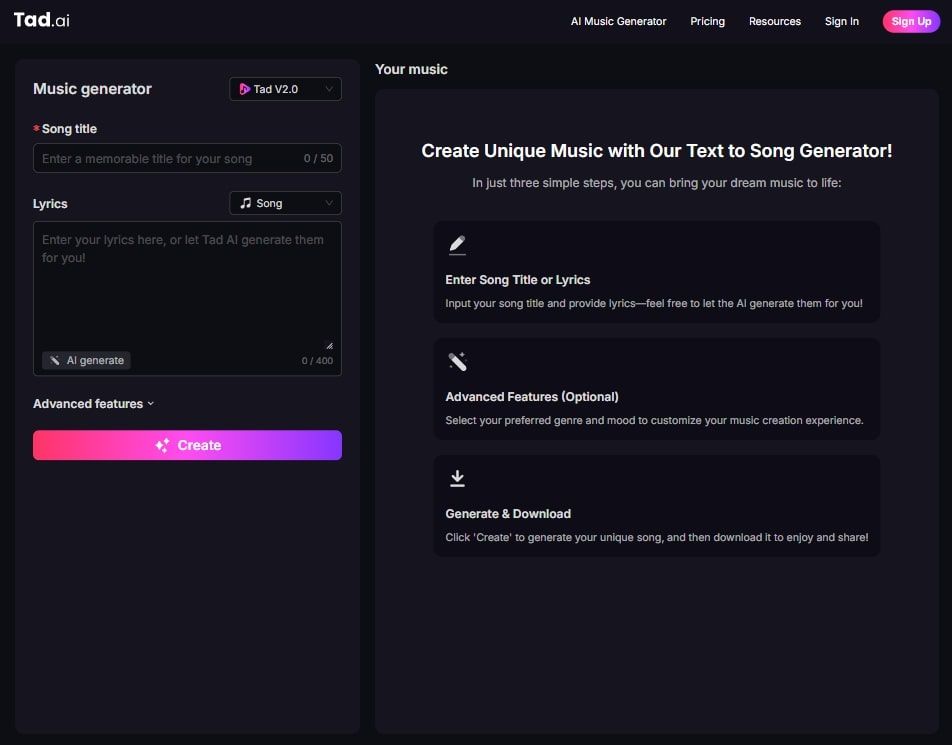
All you need to do is input a song title, add the lyric content, select a genre, choose your desired mood, and vocal! It will generate a beautiful composition that matches your inputs perfectly.
Tad AI offers dozens of genres to choose from, such as rap, rock, folk, and electronic, not to mention that it covers countless moods, be it upbeat, relaxing, sad, angry, warm, etc.
It also supports AI lyrics generation, so Tad AI can help give your tracks more depth, especially if you happen to be struggling with writer's block.
Best of all, all tracks generated on the paid plans are royalty-free. So, you can use Tad AI to produce all kinds of unique tracks for commercial uses like videos, podcasts, vlogs, ads, etc.
Conclusion
It's safe to say that Google Lyria 2 shows a lot of promise in the AI music generation space. There are still a few things for the platform to improve upon, but based on my first impression of it, I find Lyria 2 to be a helpful AI music creation tool.
However, Tad AI is a more accessible, flexible, and reliable AI music generator. The best part? You can try Tad AI at no cost now with free user credits. Give it a spin now!