
If you have ever had a perfect melody stuck in your head but no way to bring it to life, now is time to experiment. We are living in a golden age of AI music generation, where typing a simple text prompt can instantly create radio-ready tracks that sound frighteningly human.
I’ve spent the last few weeks testing the latest updates to separate the true game-changers. Here is my breakdown of the 5 best AI music generators from text that you need to try right now to start creating your own hits.
- Tad AI - Best AI Music Generator from Text Overall
- Suno - Best AI Music Generator from Text for High-Quality Output
- Loudly - Best AI Music Generator from Text for Royalty-Free Music
- MusicGPT - Best AI Music Generator from Text for Versatile Tools
- Mureka - Best AI Music Generator from Text for Intuitive Creation
Tad AI - Best AI Music Generator from Text Overall
Tad AI Music Generator
A seamless, straightforward AI music generator.
Tad AI music generator takes the top spot primarily because of how effortless it makes the text to music process.
You simply type in your text prompts or enter your own lyrics, select a genre or mood, and the AI weaves them into a complete composition. It feels magical to watch a few sentences of text transform into a fully realized track with vocals and instrumentation in just seconds.
Beyond just text inputs, Tad AI is packed with tools that elevate it above a standard AI music generator. Powered by advanced models like Mureka, this platform can finally create high-quality, studio-grade tracks.
Moreover, it also offers a unique “deep reasoning” engine for lyric generation and an image to music feature that interprets visual vibes into sound. Whether you use the integrated prompt helper or your own words, Tad AI acts like a full-stack music studio right in your browser.
Pros:
- Powered by industry-leading music models
- Supports genres such as Rap, Country and Jazz
- A wide range of tools available
- Royalty free music for commercial use
Cons:
- The free plan feels restrictive
Start your musical journey with Tad AI music generator now >>>
Suno - Best AI Music Generator from Text for High-Quality Output
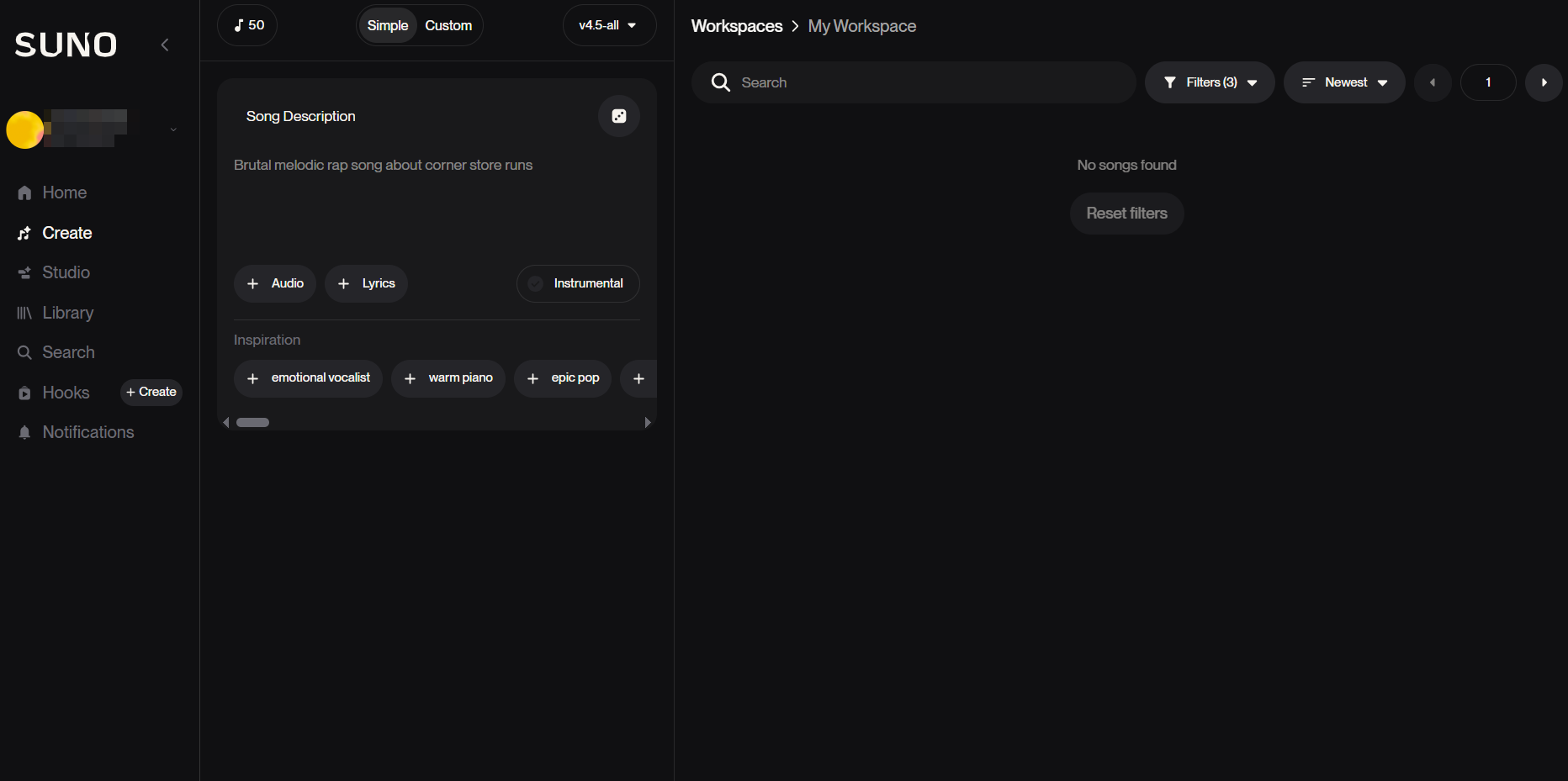
If your main priority is getting a song that sounds like it was recorded in a high-end studio with professional vocalists, Suno is your go-to.
You can type in a simple prompt or paste in your own lyrics, and the V4.5 (or the new V5) models will generate a track with vocals so realistic they are hard to distinguish from human singers.
What sets Suno apart is its Studio workstation, which blends AI music generation with editing tools. It is not just about one-shot generation anymore; you can now remix tracks, upload your own audio to use as a reference, and even split songs into up to 12 separate stems to use in other software.
Pros:
- Industry-leading vocal realism
- Stem separation
- Get 50 credits daily for free
Cons:
- Users don’t own the commercial rights unless subscribe
Loudly - Best AI Music Generator from Text for Royalty-Free Music
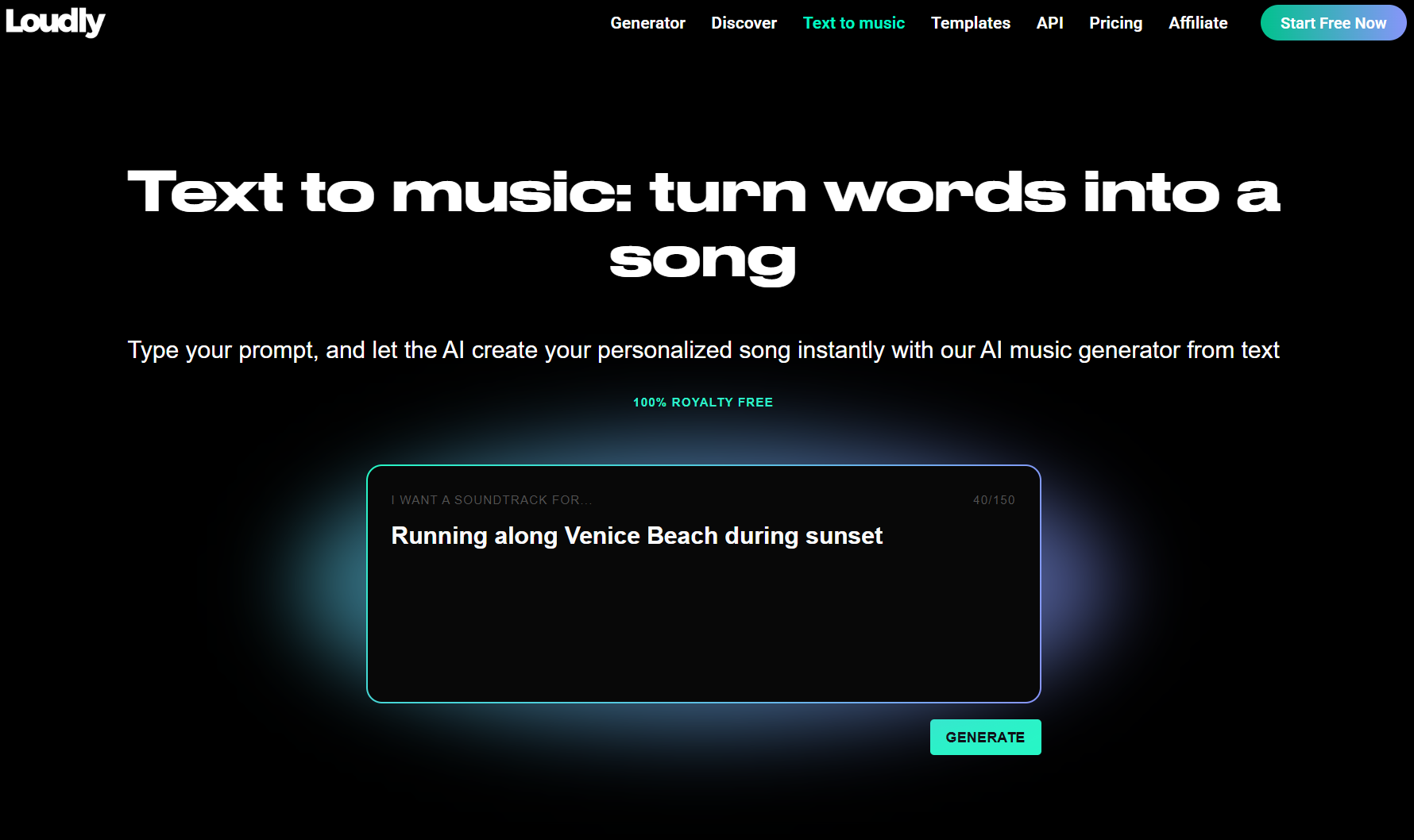
Loudly is an AI music generator from text that creates tracks from simple text prompts by assembling high-quality audio loops. Unlike other tools that generate raw waveforms from scratch, Loudly’s engine ensures that every result sounds like it was mixed in a real studio.
For content creators, this is no doubt the option regarding copyright. Their licensing is ironclad, meaning you can use the tracks generated by Loudly in monetized YouTube videos, podcasts, or ads without ever fearing a copyright strike.
I also love the control it offers after the initial generation. You aren't stuck with the first result; you can tweak the energy levels, change the song structure, and even mix instruments to fit your video's timing.
Pros:
- 100% Royalty-free music output
- Studio-quality audio
- Granular customization to adjust specific elements
Cons:
- No generative vocals
MusicGPT - Best AI Music Generator from Text for Versatile Tools
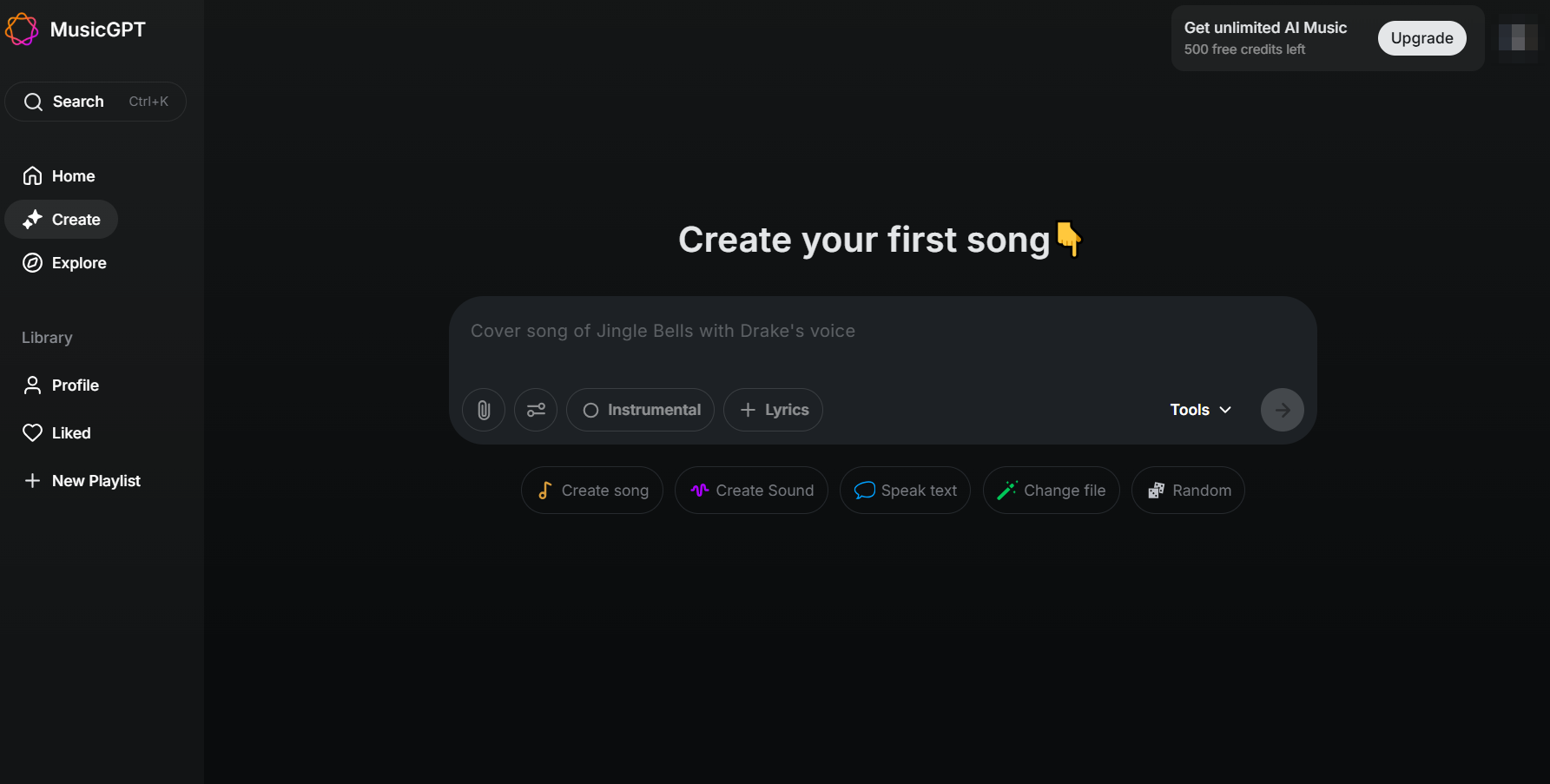
MusicGPT operates on a straightforward text to music workflow that makes creation fast. You simply type a description or add lyrics into the prompt box, and the AI instantly interprets your words into high-fidelity audio.
What truly sets this platform apart is the variety of specialized tools beyond just music. I use the “Create Sound” mode for generating unique sound effects and “Speak Text” to create realistic voiceovers for videos.
The “Change File” feature is another highlight, allowing you to remix existing audio. You can upload a track and use a text prompt to shift its genre or style completely, giving your old ideas new life.
Pros:
- Bundles versatile tools into one single platform
- Text to speech integration
- Fast workflow through text prompts
Cons:
- Less specialized songwriting
Mureka - Best AI Music Generator from Text for Intuitive Creation
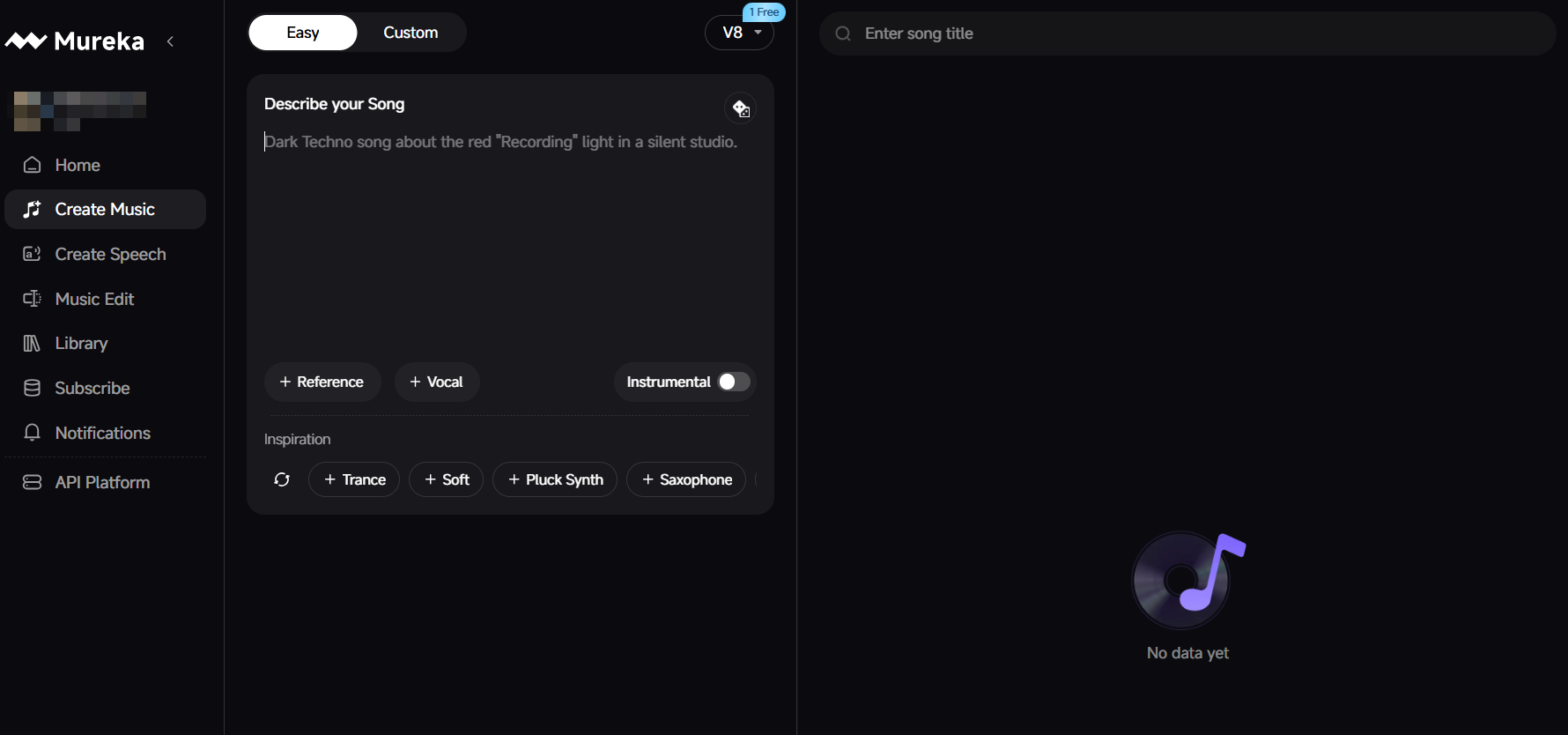
Mureka earns its spot on this list by lowering the barrier to entry with its Easy mode. If you find complex dashboards intimidating, you will love how this tool lets you generate a complete track just by typing a single line of text.
But don’t let the simplicity fool you; switching to its Custom mode unlocks a surprising amount of control without becoming overwhelming. You can upload a reference file and the AI will use that as the foundation for the song, which is a feature most competitors lack.
I also appreciate the flexibility in their advanced options, which allow you to tweak styles or modify the vocal gender between male and female. It strikes a perfect balance between being accessible for beginners and powerful enough for those who want to fine-tune their results.
Pros:
- One-line creation for quick output
- Reference audio input
- Flexible commercial rights
Cons:
- No free plan offering
Conclusion
All of these AI music generators from text we’ve covered today prove that professional-quality music is now accessible to everyone.
However, if I had to recommend just one tool to get you started, Tad AI is undeniably the best all-round performer.
While other tools like Suno excel in vocal realism and Loudly is great for copyright safety, Tad AI offers the most complete, studio-like experience right in your browser, making it my top pick.